Certification
What Is the Glutensiz Tatil Approval Certificate? Levels, Inspections and Verification
Who issues the certificate, what is checked, how levels are decided, and how can you tell a certificate is genuine?

The Glutensiz Tatil Approval Certificate is an independent verification programme that inspects the gluten-free services of hotels in Turkey on site, against a publicly available standard. Its aim is simple: to let people with coeliac disease and others who eat gluten-free make decisions based on an on-site check rather than on the hotel’s own claims.
Why is a certificate like this needed?
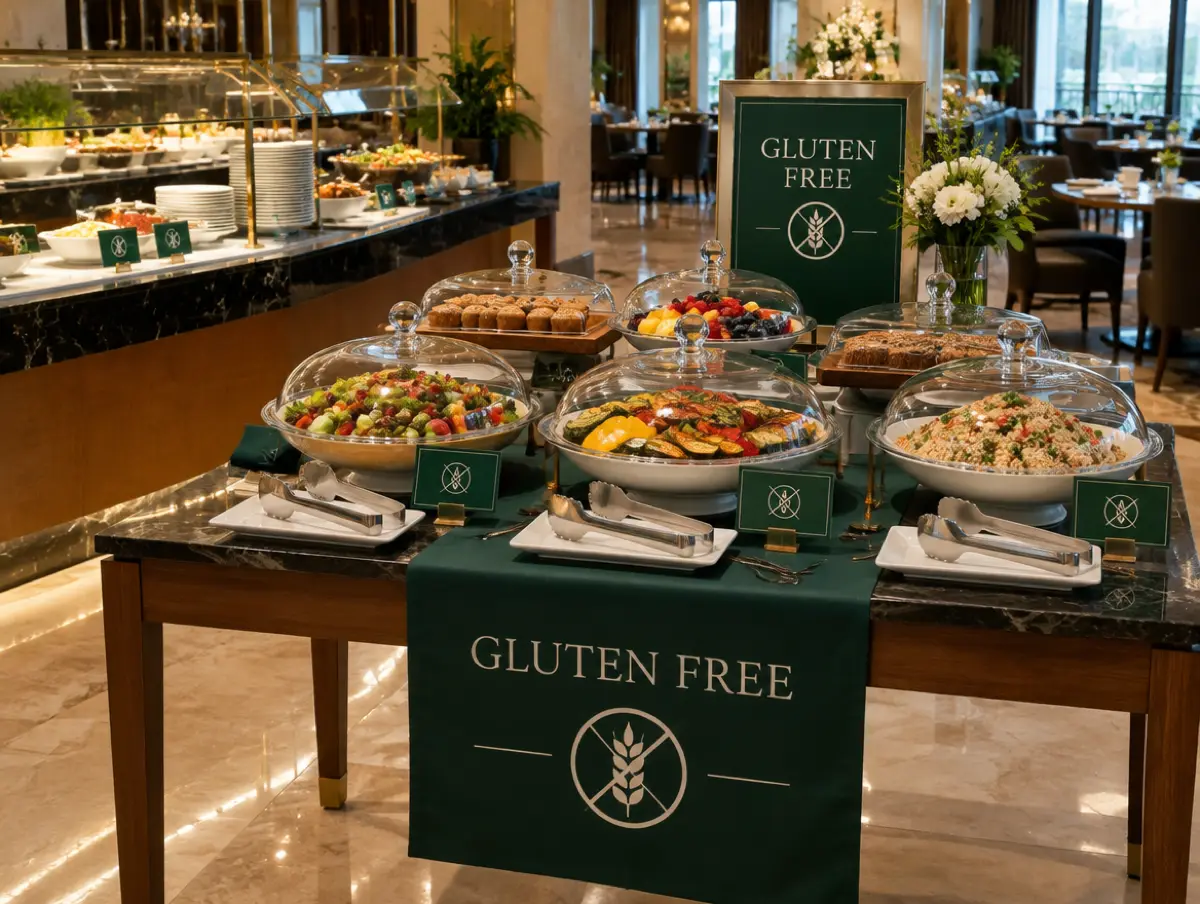
The phrase “gluten-free options available” is turning up on more and more hotel websites. But it guarantees nothing, from a separate fryer to separate serving tongs. For people with coeliac disease, what matters is not the menu but how the kitchen actually works. The certificate makes that visible.
Three levels
| Level | In brief | Who is it for? |
|---|---|---|
| Gluten-Free Friendly | Trained staff, safe sourcing and storage, separate serving tongs, labelling. | People sensitive to gluten who follow a lighter restriction |
| Gluten-Free Safe | Separate preparation area, colour-coded equipment, separate fryer, a covered and separate buffet section, written procedures. | People with coeliac disease and their families |
| Coeliac Expert | A separate kitchen or enclosed unit, laboratory testing (<20 ppm), a dietitian-approved menu, full choice at every meal. | Highly sensitive people with coeliac disease |
Each level has both a score threshold and a set of mandatory criteria. However high the overall score, a level is not awarded if even one mandatory criterion is not met. All the criteria are published openly on the Inspection Standard page.
How does the inspection work?
- Application and initial assessment: the hotel fills in a form describing its current practices. The target level and any gaps are identified together.
- On-site inspection: the inspector works through the stores, kitchen, buffet, restaurants and service processes one by one with a checklist, interviews staff, looks at records and carries out surface tests.
- Laboratory (Coeliac Expert): samples taken from plates ready to be served are sent to an accredited laboratory.
- Decision and publication: the hotel receives the outcome as a report showing its score, level and results for each criterion. If a certificate is awarded, the hotel is listed in the guide.
- Unannounced checks: at least one unannounced inspection is carried out while the certificate is valid. Guest reports can trigger additional checks.
How can you tell a certificate is genuine?
Every certificate has a number in the format GT-YYYY-NNNN and a QR code. Enter the number on the Verify a Certificate page and you will see straight away whether it is valid, suspended, revoked or expired. We don’t hide suspended certificates; transparency is the foundation of the programme.
What does the certificate not guarantee?
No kitchen can promise zero risk. The certificate shows that, on the date of inspection, the hotel had put in place and was following systems to prevent cross-contamination. We always advise guests to restate their needs when booking and again on arrival. For details, please read our disclaimer.
Would you like your hotel to be assessed? Take a look at the programme details and fees.